X


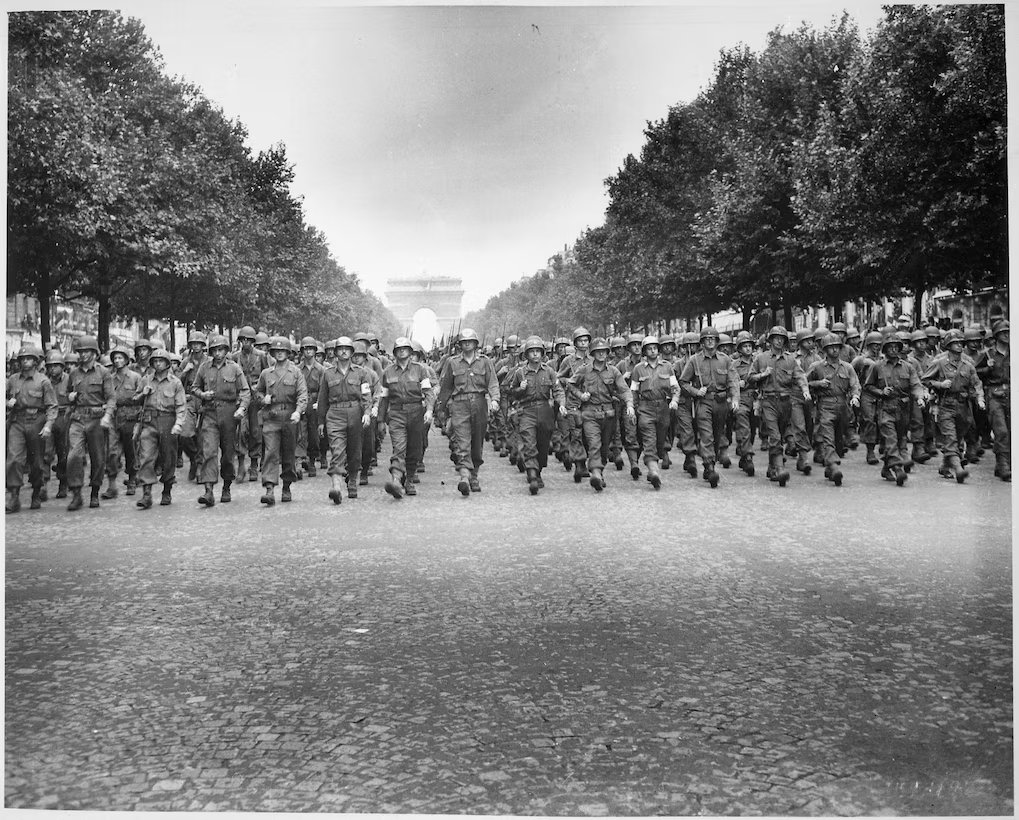
It’s one of the most iconic scenes of World War II. On August 29, 1944, four days after Paris’s liberation, fifteen thousand US soldiers from the battle-hardened 28th Infantry Division, known as the “Keystone Division,” originally drawn from the Pennsylvania National Guard, formed up and marched through the heart of Paris.
The men shown in the glorious images had been trucked the day before from the bloody hedgerows of Normandy, then told to clean their weapons and shave. Their route took them first along the Avenue Foch, the widest avenue in Paris, where the Germans had paraded on 14 June 1940 when they occupied Paris.
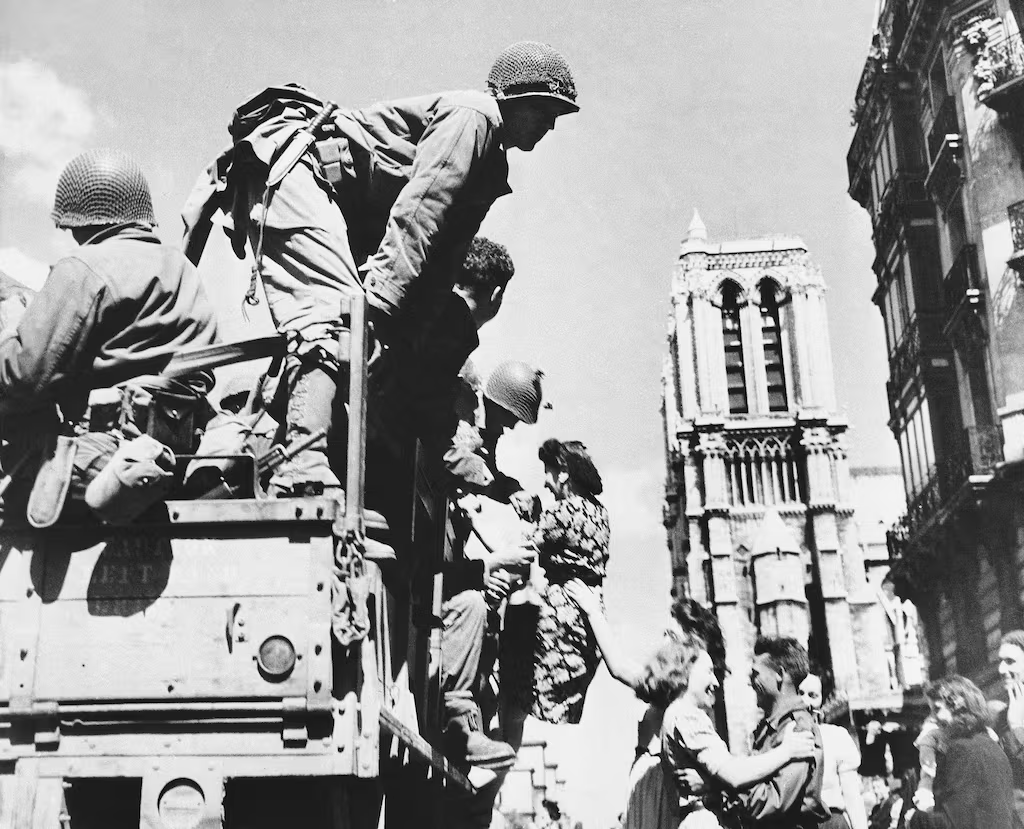
Parisians welcomed the Keystone Division with immense joy and gratitude, embracing the soldiers, climbing onto their tanks, showering them with flowers, and handing them bottles of wine as the division strode past the Arc de Triomphe and down the Champs Elysees.
The soldiers were fresh from battle. Some of their uniforms were dirty and stained.
“We smell like dead cows and gunpowder,” one soldier told his buddy. “I hope these people don’t get too close.”
Another soldier, Corporal John Miller, recalled: “Before I knew what was happening, an elderly French gentleman grabbed me by the shoulders, kissed both my cheeks, and started weeping. He just kept saying “Merci, merci.””
One private, serving as a medic with the 28th Division’s 112th Infantry Regiment, remembered August 29 as if it were a gorgeous dream, punctuating a seemingly endless nightmare. It was a hot day, and the men, already worn by their exertions in Normandy, had to wear their steel helmets and carry loaded rifles.
They were led through the heart of Paris by division commander Major General Norman “Dutch” Cota, who had landed on Omaha Beach on D-Day with a different division. He had famously exhorted the Rangers to “lead the way” from the bloodiest of the five invasion beaches on June 6.
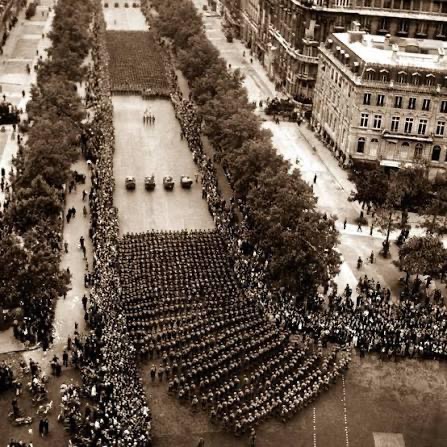
The Keystone men marched past dignitaries, saluting General Charles de Gaulle, who had famously stridden down the Champs-Élysées three days earlier and was hailed as France's savior. There, too, was Lt. General Omar Bradley, commander of the 12th Army Group. It was Bradley who had prepared the division for combat during intensive training and led the unit from June 1942 to February 1943.
Unlike the men of the 4th Infantry Division, who had fought into the city on August 25, the Keystone soldiers did not get to enjoy Parisian hospitality after their triumphant march. They did not camp in the Jardin de Tuileries. They did not party long into the night. Instead, that afternoon of August 29, they boarded trucks and headed straight back into combat.
One veteran recalled: “In the morning, we were kings in the grandest city on Earth. By midnight, we were sleeping in a cold, dark ditch, waiting for the artillery to start again.”
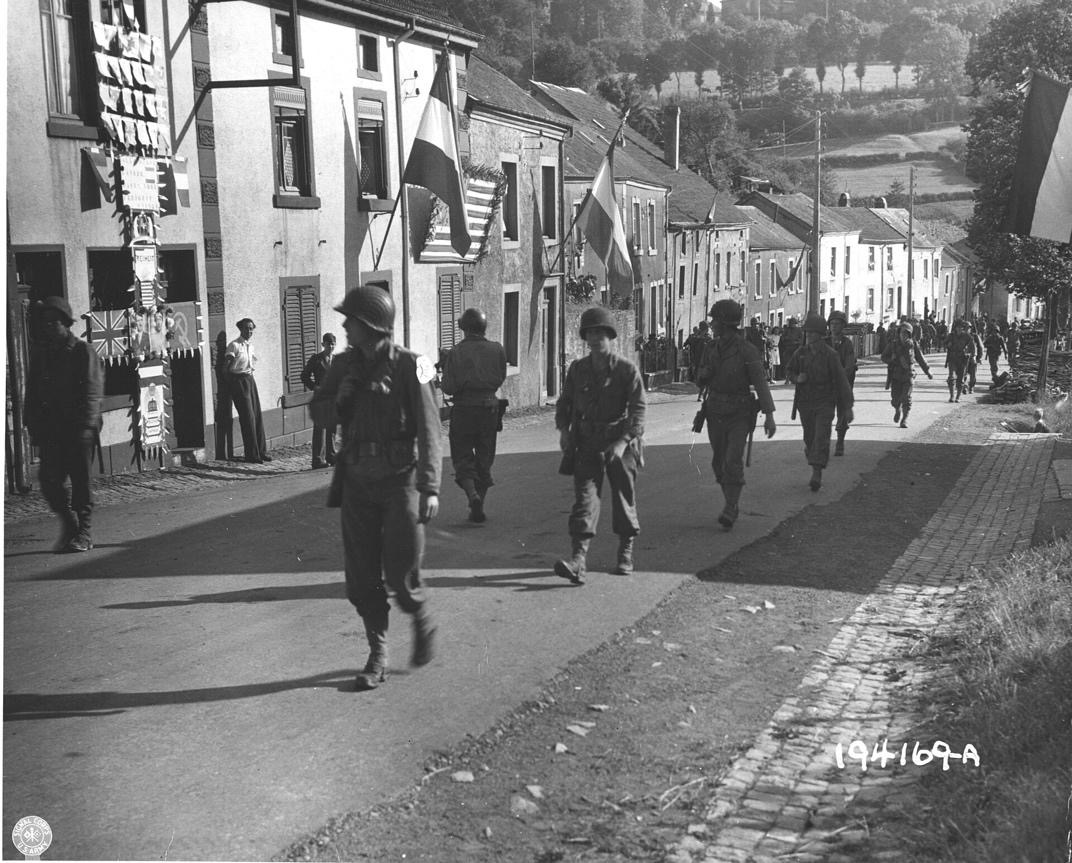
The sun-soaked avenues of Paris gave way to the dark, deadly Hürtgen Forest on the Belgian-German border. The men who had marched through the City of Light now had to attack heavily fortified German positions amid increasingly atrocious weather. Hundreds died from tree bursts when German shells exploded in the upper branches, sending lethal shards of wood showering down.
The Battle of the Hurtgen Forest, which lasted from 19 September to 16 December 1944, became the longest battle ever fought by the US Army and one of its costliest. The Keystone Division was virtually destroyed, suffering more than 6000 casualties in less than two weeks in November 1944, with almost every company commander killed or wounded.
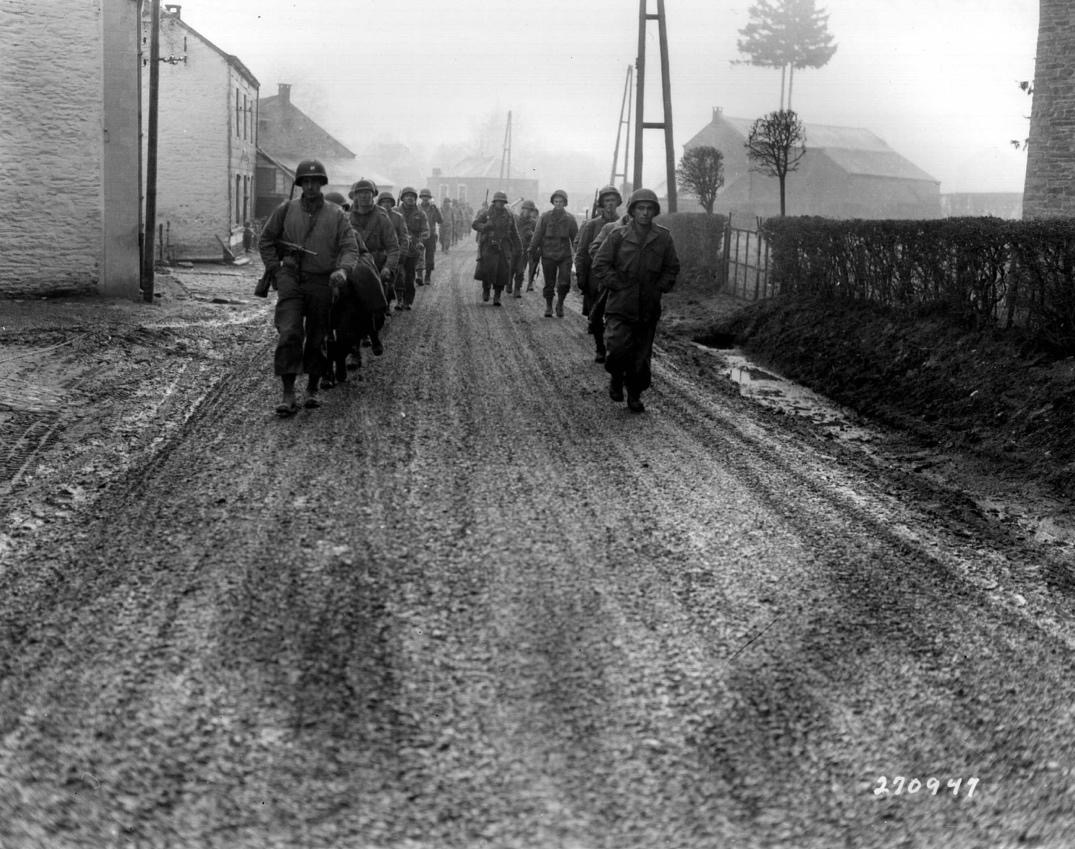
It was a staggering loss, and the survivors found scant comfort in the fact that their bloodletting had earned them a new nom de guerre, the “Bloody Bucket” division. Entire regiments were decimated. Proud leaders like Norman Cota were almost broken. Yet, remarkably, the division fought on with grit and vigor, playing a critical role in the early stages of the Battle of the Bulge, the deadliest battle for the US in WWII.
Few of the men who marched through Paris on August 29, 1944, could stand and fight by the time the war ended in May 1945. In 196 days of combat, the “Bloody Bucket” division suffered an extraordinary 16,762 casualties.
Long after the war, the memory of walking, 24 men abreast, down Avenue Foch on August 29, 1944, still burned bright. The Pennsylvania boys had been the face of American victory and of liberation. For one day at least, they had, as one veteran recalled, believed “the world was gonna get a little better.”


