X


The Hurtgen Forest remains a sobering reminder of the cost and waste of war.
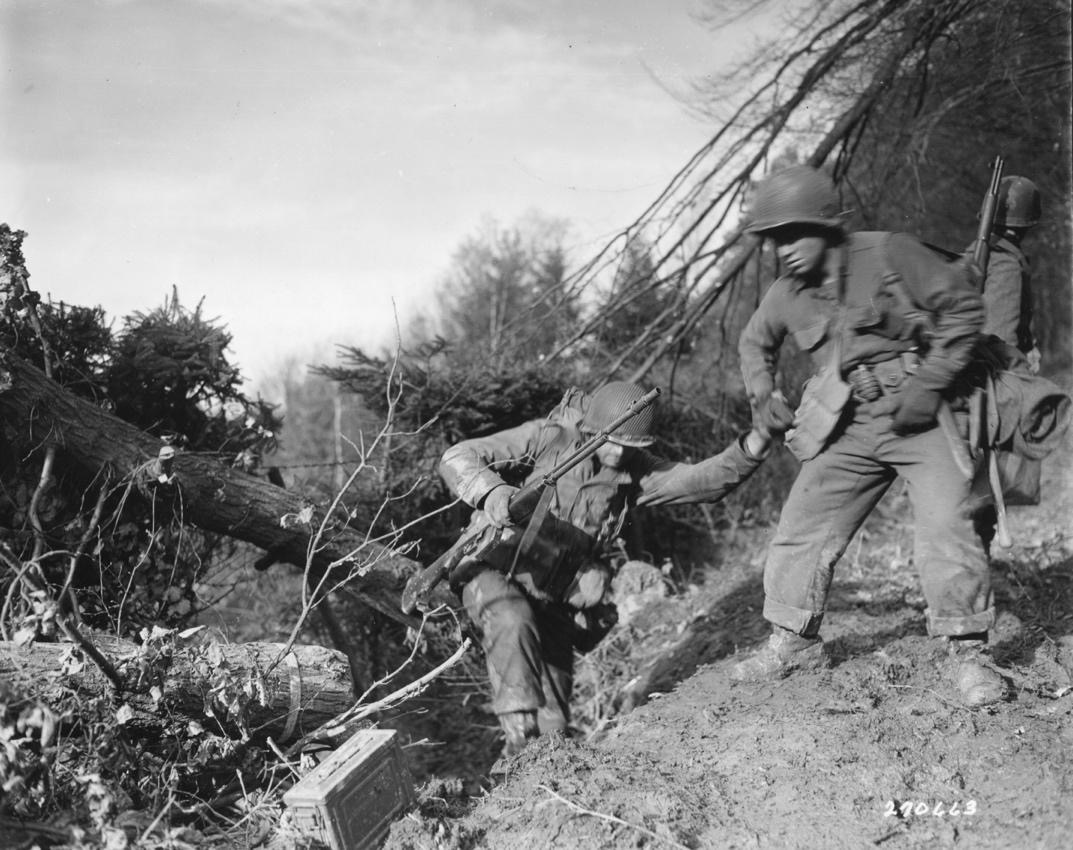
A few weeks ago, on Friends’ Last Battles Tour, we stopped at the legendary Hill 400, deep in the Hurtgen Forest. It was a beautiful fall day, which made it hard to imagine the horrors that befell the Americans who fought here 82 years ago. Some have called what happened here the greatest defeat for the US Army in WWII, a “meat-grinder” which could and should have been avoided. It was indisputably a tragic bloodletting that decimated one proud division after another.
The Battle of the Hurtgen Forest raged in fifty square miles of dense pine forest, marked by steep ridges and dark valleys along the Belgian-German border. Fought from mid-September to mid-December 1944, the campaign cost the US between 30 and 50 thousand casualties, more than the Germans suffered.
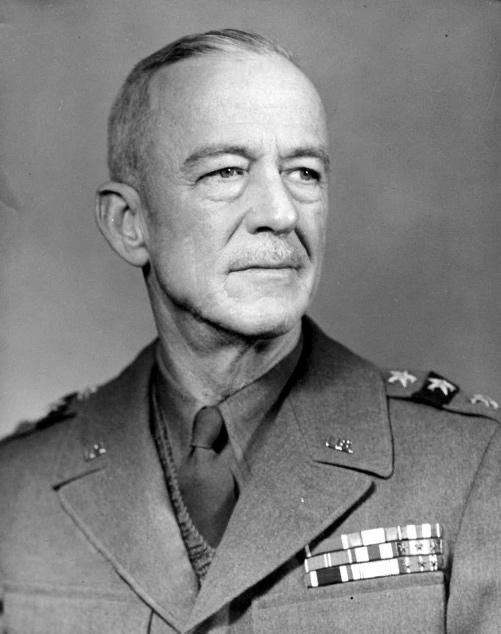
Let’s set the scene for the ill-fated US First Army, commanded by Courtney Hodges. By October 1944, the Allies had liberated France and were pressing against the western border of the Third Reich. On 22 October, after heavy American losses, the ancient city of Aachen fell to Hodges’ forces. Meanwhile, just to the southeast, in the Hurtgen Forest, fighting grew increasingly tragic and bloody by the day.
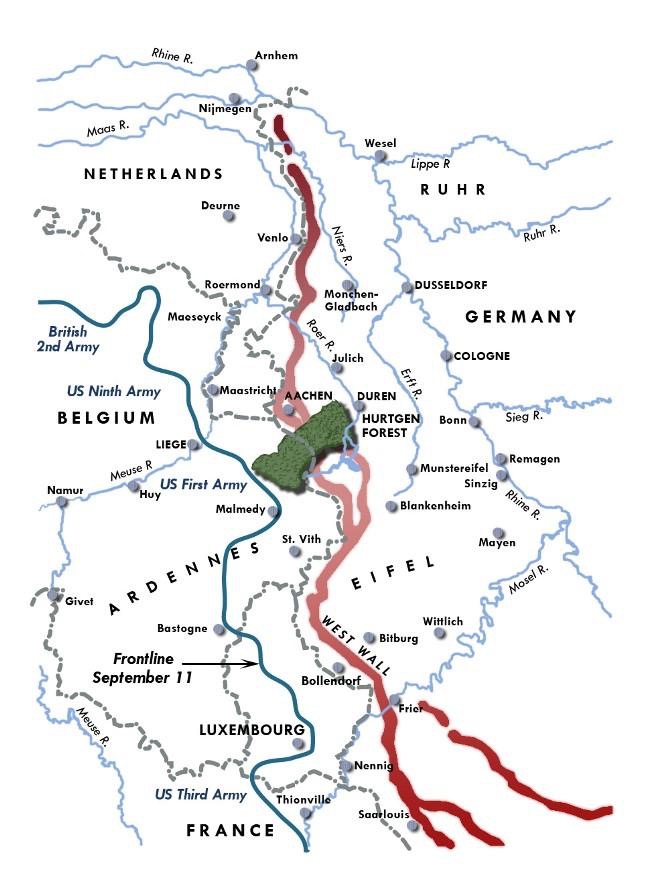
The capture of Aachen did not break the German line as hoped. There would be no shortcut to the Rhine. Instead, Hodges’ forces encountered well-dug-in, superbly led Germans in the Hurtgen Forest. As Jim Gavin noted, the dense woodland robbed the U.S. Army of its key advantages - mobility and superior firepower. So why press on? Why enter the infernal woods? The U.S. First Army’s key objectives were the Roer River dams. If the Germans opened the floodgates at these dams, GIs pushing east would be trapped. The dams had to be reached. Rather than outflanking or bypassing the Hurtgen Forest, Hodges ordered infantry divisions to push right through it, with horrific results.
The “meat grinder” was a special kind of hell. The trees were tightly bunched, reaching more than fifty feet tall in places. The endless firs blocked the light. Trails turned to mud as the fall rains beat down. Tanks got stuck or slid off hillsides. The Germans emerged from their elaborate bunkers, laid mines, and set booby-traps.
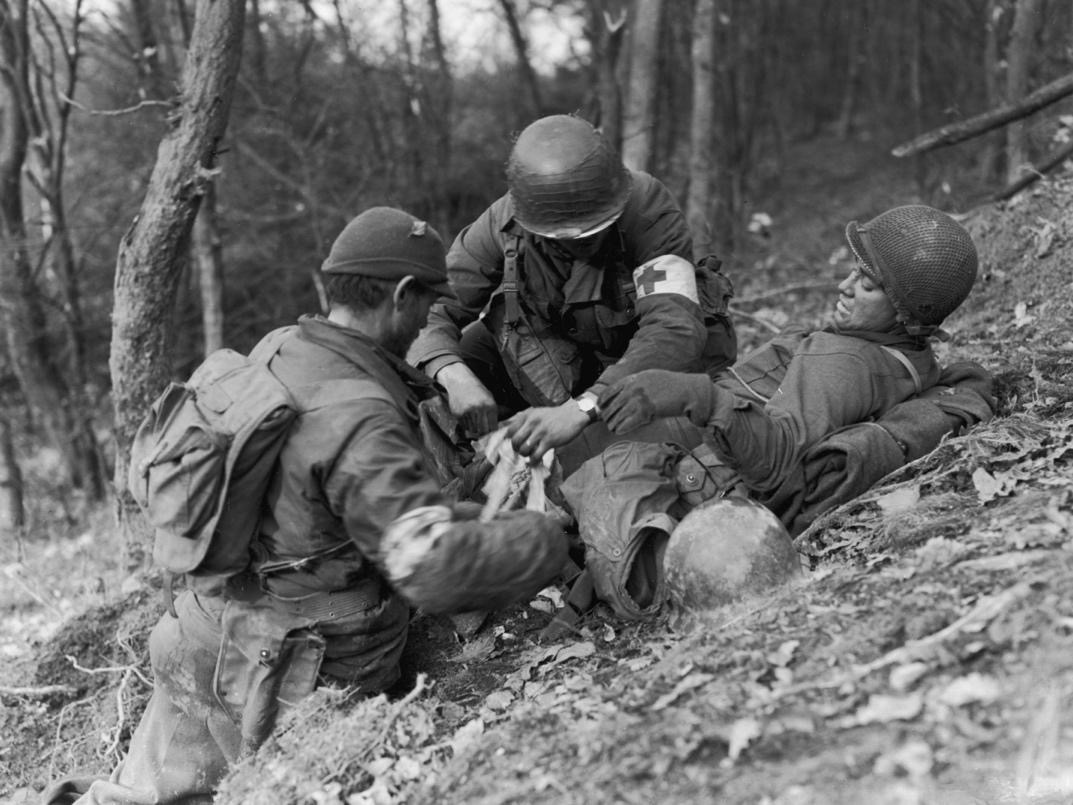
Casualties soared, and the Hurtgen soon resembled the shredded woods of the First World War. Men were told to hug the nearest tree trunk when shell bursts hit the tree tops – the theory being that the lethal shards of wood would fall away from the tree, but only the most composed soldiers had the wits and courage to follow the advice.
The Germans fired at the treetops with relish, killing and wounding hundreds of Americans, terrifying thousands more. Combat fatigue was endemic. Strong men broke under the strain. They shivered and froze in foxholes, suffered trench foot and nervous breakdowns, and for week after week seemed to be going nowhere. Perhaps the best recreation of this trauma is the underappreciated movie “When Trumpets Fade.”

Yet Hodges sent division after division into the meat grinder, repeating the same mistakes as the most stubborn of his peers in WWI. He was arrogant, narrow-minded, and a bully – relieving ten of the thirteen corps and division commanders in the 12th Army Group who lost their positions in Europe in WWII. Woe betide any brave officer who insisted on trying to outflank the Germans rather than “smash ahead.” In the words of Ernest Hemingway, who reported on the battle, the Hurtgen became “Passchendaele with tree bursts.”
It was indeed WWI all over again. In October 1944, the 9th Infantry Division tried to secure the crossroads town of Schmidt. It advanced less than two miles at a cost of 4,500 casualties. That’s one man down for every two feet gained. Battalions were ripped apart, time and again. Jacob Ruser, a combat medic with the 12th Infantry Regiment, 4th Infantry Division, saw the results – horribly mangled young Americans. The combat “was the worst battle the U.S. Army fought in WWII in Europe. It was hell on earth.”
As October turned to November, the cold and wet intensified the suffering. Mildred Radawiec, a nurse with the 3rd Auxiliary Surgical Group, remembered: “It seemed to me that many soldiers were relieved when they were wounded. They felt they had a chance to survive by escaping the near-certain death of the forest.”
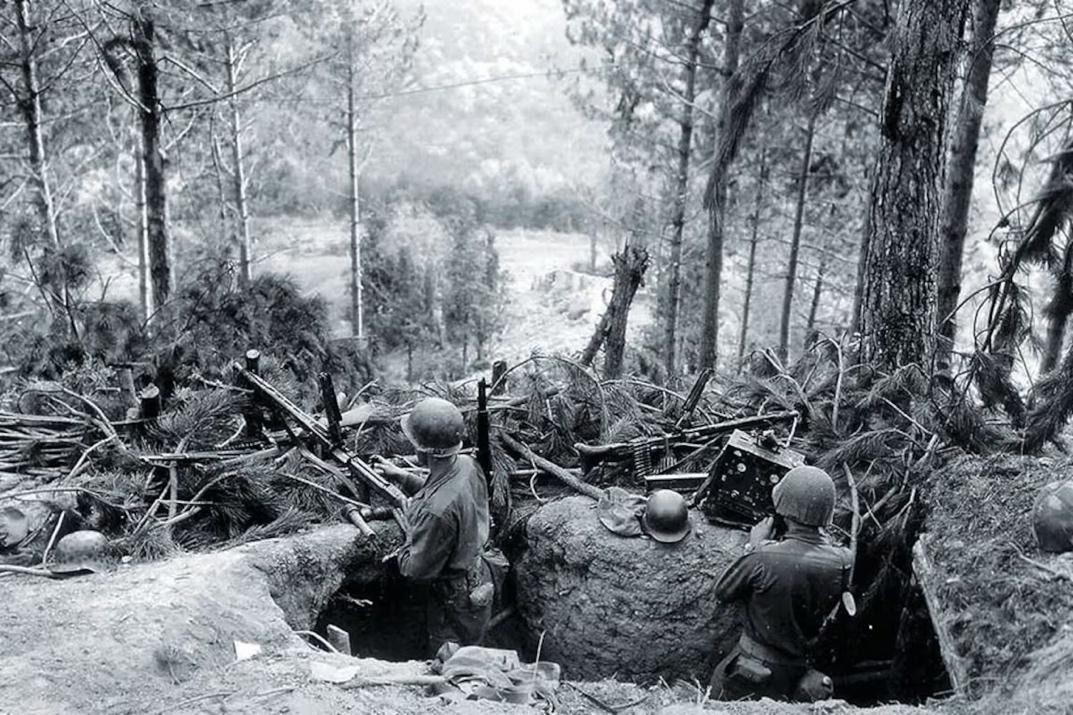
By the time Hodges’ tragic campaign ground to a halt in December, more than 30,000 American soldiers had been killed, wounded, or incapacitated. The US 22nd Infantry Regiment, which Hemingway reported on, suffered an astonishing 85% casualties. All of the 28th Infantry Division’s company commanders were killed or wounded in less than two weeks. According to Jim Gavin, commander of the 82nd Airborne Division, it was “a ghastly mistake…one of the most unproductive, and most ill-advised battles that our army has ever fought.” By contrast, the Germans suffered approximately 28,000 casualties in the Hurtgen. They had succeeded in stalling the Allies and bleeding some of the best units in the US Army almost dry.
It was all for nothing. Hodges suffered no comeuppance, and the Roer dams were blown open by the retreating Germans in early 1945, flooding the valleys exactly as feared. The meat grinder was quickly forgotten by the press amid the crisis and confusion of the Battle of the Bulge, the deadliest combat for the US in WWII, which began on December 16, 1944. As the Allies then pressed on to the Rhine and eventual victory, the shredded, deadly firs were left far behind. The longest battle fought by the US in WWII was consigned to the margins of history. Victory in Normandy and the Ardennes, the heroics of the Screaming Eagles, took center stage.
Back at Hill 400 on a beautiful fall day, there is little to remind you of the immense tragedy that unfolded nearby. We clamber around a bunker, admire the views, and try to imagine what happened here to one of the most decorated and capable units in US history – the 2nd Ranger Battalion.
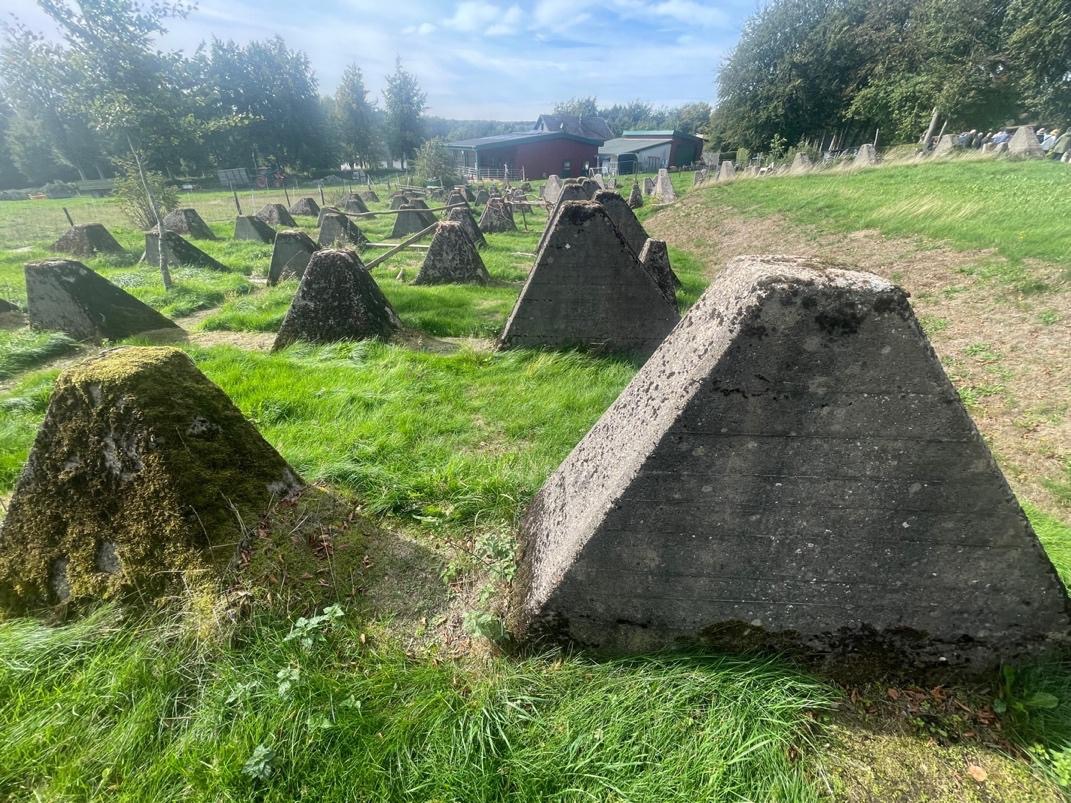
Having landed on D-Day and scaled the cliffs at Pointe du Hoc, the 2nd Ranger Battalion slogged across Normandy, cleared forts in Brittany, and then entered the “green hell” of the Hurtgen. On 7 December 1944, 65 Rangers from Companies D and F assaulted Hill 400, the most important observation point in the Hurtgen. Fewer than half were still standing when relieved the following day. Like every other battalion sent into the meat grinder, the Rangers paid an enormous, avoidable price. More than eight decades later, we should remember, in places like the Hurtgen Forest, how costly and wasteful the fighting to liberate Europe often was, and how imperfect the science of war is.


