X


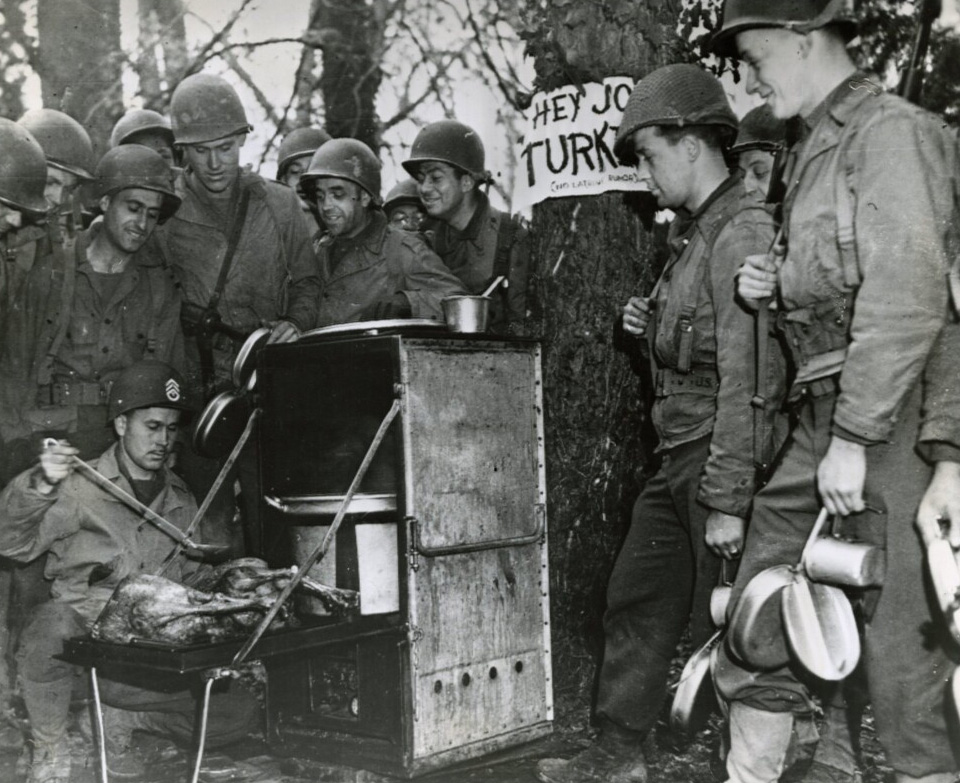
Thirty years of listening to the men who fought in Europe puts our modern holiday grievances into sharp perspective.
Every November, as Thanksgiving approaches, I find myself thinking back on the men I’ve known who spent the holiday shivering in European foxholes in 1944.
Whether dug into the dense woods of the Ardennes or high in the Vosges Mountains, those soldiers felt the distance of Thanksgiving acutely, cut off from home, family, a warm hearth, and simple safety. Over nearly three decades of sitting down with hundreds of World War II veterans, the men whose lives fill The Bedford Boys, The Longest Winter, The Liberator, and Against All Odds, I have heard countless stories of fear, endurance, and unimaginable loss. Yet when those men sat across from me in their living rooms or kitchens decades later, the emotion they showed most often wasn’t bitterness. More often than not, it was an unsentimental gratitude for the ordinary things most of us take completely for granted today.

In The Liberator, Lt. Colonel Felix Sparks and the battered infantrymen of the 45th Thunderbird Division spent November 1944 fighting to survive the Vosges Mountains, some of the bloodiest, coldest terrain in Western Europe. By Thanksgiving Day, Sparks had already come through amphibious landings in Sicily, Salerno, and Anzio, watching entire companies wiped out around him, including his own. When I interviewed him at his home in Colorado, he never once talked about victory or mentioned medals. Losing so many men was something he never got over. “You don’t recover from that kind of grief,” he told me. When GIs managed to haul hot turkey up washed-out mountain tracks to his front-line riflemen that November, men who had spent weeks sleeping in waterlogged slit trenches ate with their bare, mud-caked hands. Just to be alive, to have a warm meal, and to sit beside a buddy who had made it through another week of mortar fire was enough.
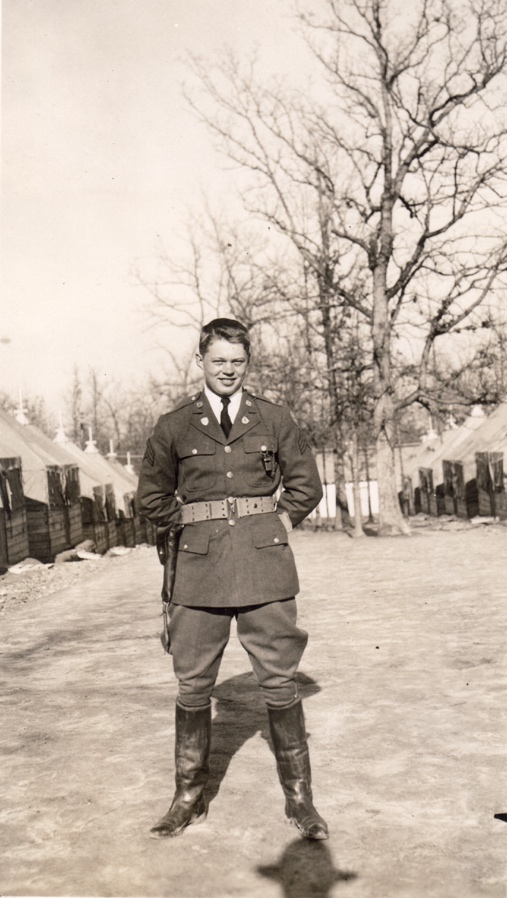
Three weeks later, in The Longest Winter, eighteen young men of Lieutenant Lyle Bouck’s Intelligence and Reconnaissance platoon were freezing in foxholes in Belgium on the eve of the Battle of the Bulge. Before the SS spearhead of Hitler’s final offensive slammed into them on December 16, they spent late November sharing cold K-rations and letters from home. After holding off a 500-man German battalion until their ammunition ran dry, they endured months of starvation in German prison camps. Years later, when I sat with Bouck in his condo in Florida, he marveled at the naivety that helped them survive. “Older men, fathers, wiser and more cautious adults, would surely have retreated,” he said, reflecting on why his platoon held its ground, and why the miracle that every single man survived captivity meant more to him than any decoration.

Then there are the young Virginians in The Bedford Boys. On June 6, 1944, nineteen men from a town of 3,000 people died in the first minutes on Omaha Beach, with three more killed soon after. That November, Thanksgiving was a grim occasion in Bedford homes, marked by empty chairs at family tables. Yet the survivors who returned carried an unspoken obligation to live well enough to justify having made it back. Whenever I visited Roy Stevens, who lost his identical twin brother, Ray, on D-Day, at the National D-Day Memorial in Bedford, he would look me in the eye and say the same four words: “Freedom is not free.” Spoken by a man who had refused to shake his twin’s hand on the troopship deck because he couldn’t bear to say goodbye, those words carried the weight of a lifetime.
In Against All Odds, I followed four Medal of Honor recipients across the European theater, from North Africa in November 1942 through five amphibious landings to the thin air of the Bavarian Alps. Maurice “Footsie” Britt, Keith Ware, Michael Daly, and Audie Murphy belonged to the 3rd Infantry Division, which fought longest and hardest to liberate Europe, earning a record 40 Medals of Honor. Staring up at a heavily defended mountaintop in Italy, Britt didn’t pray for glory or even his own survival. “Lord, lead me,” he whispered before leading his outnumbered men up the slope. “Don’t let me do anything that will cause any of these boys to be killed unnecessarily.”
Today, some of us dread Thanksgiving, with its travel headaches and forced encounters with difficult relatives. Spending three decades listening to the men who fought from Normandy to the Rhine puts any gripe about sitting at a table with family and friends into sharp perspective. The men I’ve known knew the exact price of a cold Thursday in November.
This Thanksgiving, gratitude doesn’t require a grand speech about sacrifice and valor or how we have lost our way as a culture. Hopefully, though, some of us can pause between mouthfuls of turkey and remember that what we enjoy today was bought by young men and women who would have given anything just to be back home.


