X


These ten photojournalists recorded some of the most iconic moments of the greatest conflict in human history.
1] Robert Capa.
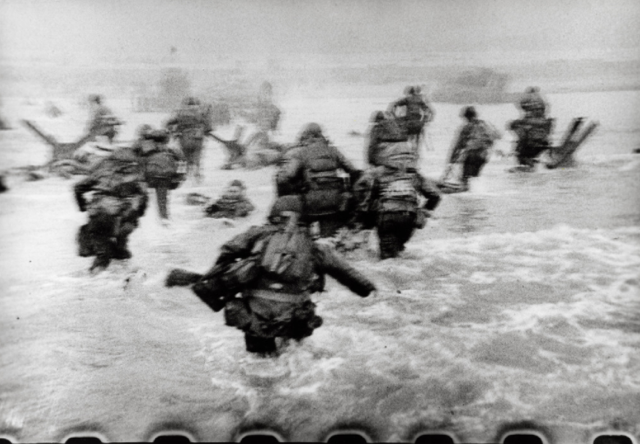
Widely considered the greatest war photographer ever, Capa is the subject of my five-year labor of love, Blood and Champagne, an homage I wrote almost three decades ago. Artist, lover, gambler, he famously said it wasn’t enough to be talented – you also had to be Hungarian, just like him. He also said that if your pictures weren’t good enough, you weren’t close enough. No snapper had greater courage, and none got closer to the drama of D-Day than Capa, who was killed at age 41 in Vietnam. His "Magnificent Eleven" photos of the 16th Infantry Regiment landing in the Easy Red sector of Omaha Beach are as stunning as when they graced Life magazine 82 years ago.
2] Margaret Bourke-White.
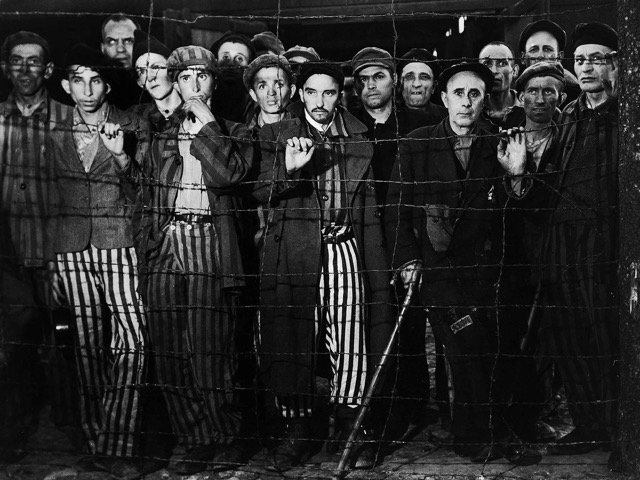
Said to be the first female war correspondent permitted to work in combat zones, Bourke-White was a phenomenon, one of the giants of photography, breaking barriers and recording the great moments of her age, from the Dust Bowl to the fight for Indian independence. Felled slowly by Parkinson’s, she died at 67 in 1971 and is still lionized. Her technique, lighting, and composition were exquisite, befitting an artist who had begun as a commercial photographer and veered into photojournalism. Among her most powerful images are those taken at Buchenwald in April 1945. “Using a camera was almost a relief,” she recalled. “It interposed a slight barrier between myself and the horror in front of me.”
3] Lee Miller.
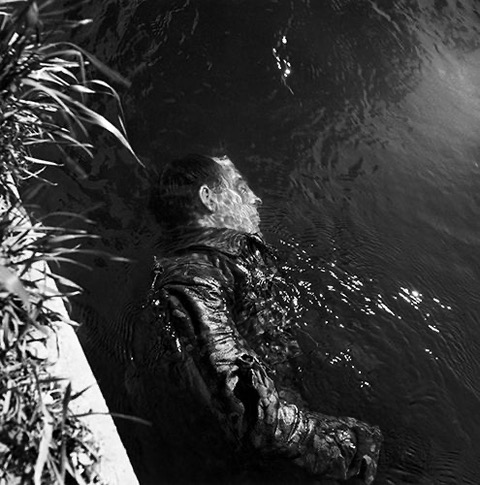
I recently saw an exhibit of Miller’s images in London and came away a little disappointed. The subject of a movie starring Kate Winslet, she was as glamorous as they come. Before covering the liberation of Western Europe for Vogue magazine, she was a muse to Man Ray and a fashion model. I was disappointed that the exhibit did not show more of her images of Dachau just after liberation. And here I should add a personal note: a good friend of mine from the 45th Infantry Division told me that he drove her around the camp, and he was constantly turning to look at her – he'd not seen an attractive woman in what felt like years. Her images from April 1945 are a fabulous record of the death throes of the Third Reich.
4] W. Eugene Smith.
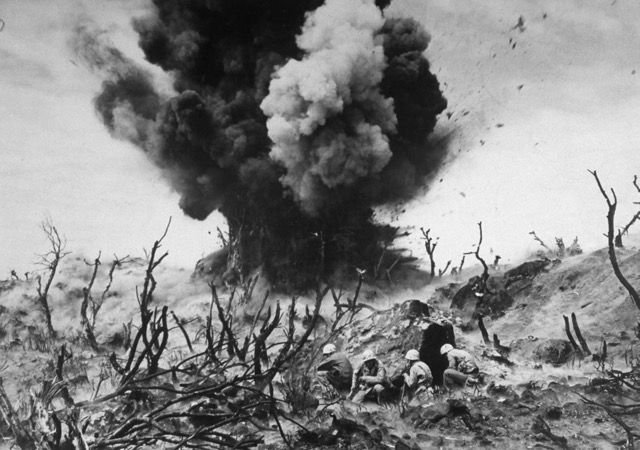
Known for his humanistic approach, Smith pioneered the photo essay and followed US forces during their island-hopping offensive, recording Marines and Japanese prisoners of war at Saipan, Guam, Iwo Jima, and Okinawa, where he was badly wounded by mortar fire. “You can’t raise a nation to kill and murder without injury to the mind,” Smith said. “It is the reason I am covering the war. I want my pictures to carry some message against the greed, the stupidity and the intolerances that cause these wars and the breaking of many bodies.”
5] David "Chim" Seymour.
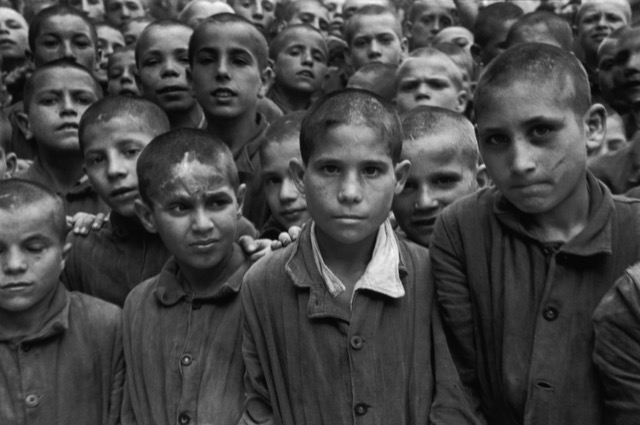
A co-founder of Magnum Photos, Seymour was a Polish Jew and a close friend of Robert Capa. They both covered the Spanish Civil War and came to the United States in 1940. Seymour then served as a photo interpreter in the US Army. He is included on this list because he, better than anyone, captured the war's impact on children. Working with UNICEF, he documented the plight of refugee children in a devastated Europe in 1948. Tragically, he was killed at age 44 in Egypt in 1956.
6] George Rodger.
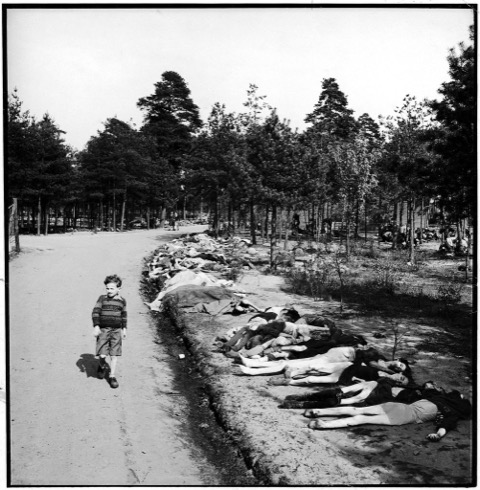
While researching my book about Robert Capa, I interviewed “Jinx” Rodger about Capa and her husband, British photographer George Rodger, who co-founded Magnum in 1947. Rodger had a long, highly distinguished career that spanned the globe, but, as with several of the photojournalists listed here, it was in the charnel house of the Third Reich, in his case at Bergen Belsen, where Anne Frank died, that he recorded his most haunting images. “You must feel an affinity for what you are photographing,” he said. “You must be part of it, and yet remain sufficiently detached to see it objectively. Like watching from the audience a play you already know by heart.”
7] George Silk.
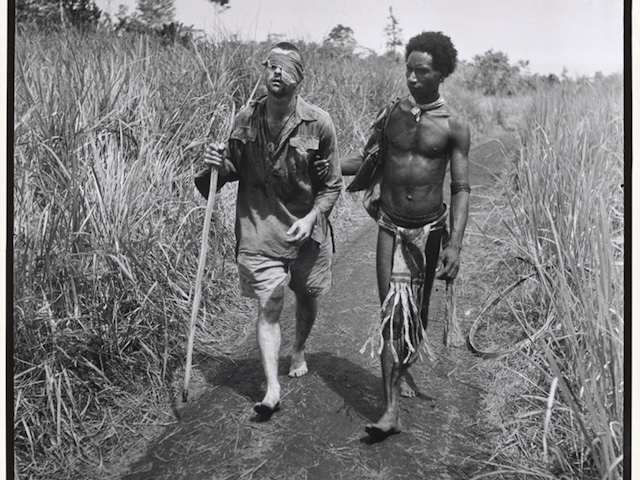
New Zealander Silk worked as a photographer for the Australian Department of Information in the Pacific, capturing this image of a blinded private being led to a hospital by a local in 1942. It became his most celebrated image of WWII. In 1943, he began working for Life magazine, covering the war and later specializing in sports until 1973. “The camera is part of you,” he said. “It’s your skin! Emotions are powerful; they hit hard, they wash over you. They can’t overwhelm you - you’re doing a job… Sometimes it was an emotion that took the picture.”
8] Joe Rosenthal.
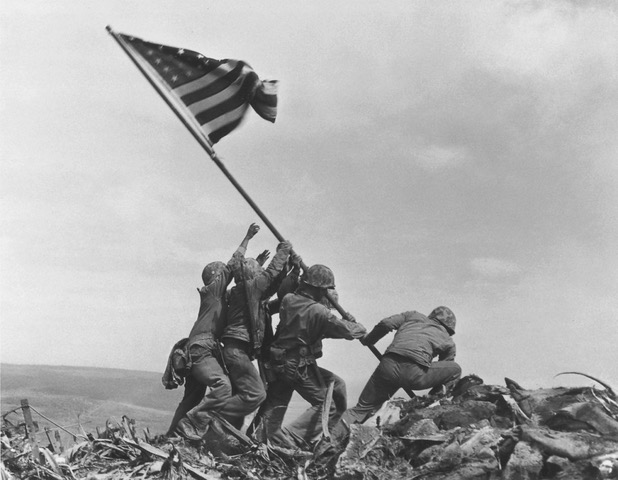
“I took the picture; the Marines took Iwo Jima.” So said Rosenthal when asked about the image that became the iconic picture of the Pacific War, the basis for the US Marine Corps War Memorial in Arlington, and the subject of a mega-selling book, Flags of Our Fathers. Rosenthal simply pointed his camera as Marines raised a flag for the second time atop Mount Suribachi on 23 February 1945. He did not look through a viewfinder. He only saw how perfect a shot it was when the Associated Press distributed it to hundreds of newspapers. There were 32 more days of dying to go. Almost 7000 Americans were killed in the battle for Iwo Jima.
9] Yevgeny Khaldei.
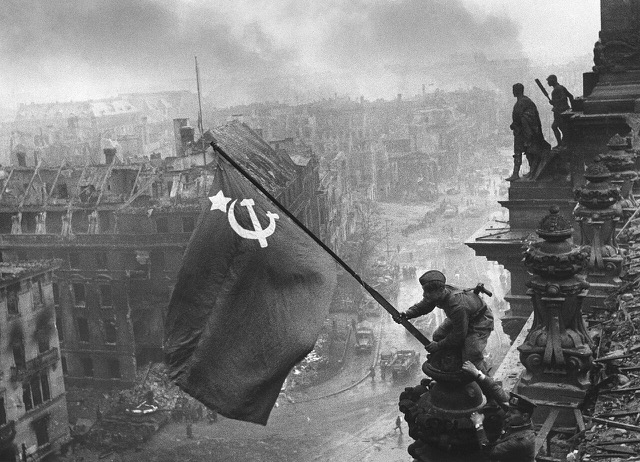
In 1918, Khaledi’s mother was shot to death during a pogrom. The bullet that killed her almost did the same to her one-year-old son. He needed all the good fortune he could find to survive the Red Army’s push to Berlin, where he captured the most famous image of the Third Reich’s defeat. He’d seen Joe Rosenthal’s Iwo Jima image and was eager to replicate it by staging a similar moment as a Red Army soldier raised the Soviet flag over the Reichstag in Berlin. “It is a good photograph and historically significant,” he said when asked about the staging. “Next question please.”
10] Henri Cartier-Bresson.
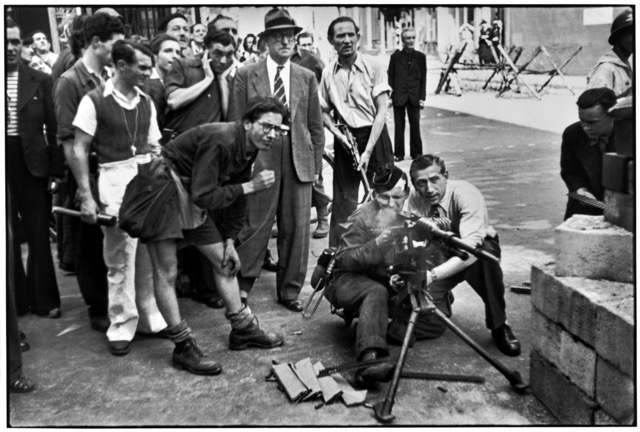
Captured by the Nazis and held in a POW camp for three years, yet another friend of Capa’s, Cartier-Bresson, escaped in time to document the happiest day of WWII, the liberation of Paris on 25 August 1944. It was one of the best moments in my research on Capa’s life when Cartier-Bresson sent me a fax of a poem he’d written about Capa, comparing him to a bullfighter. Cartier-Bresson outlived Capa, his co-founder of Magnum, by four decades, dying at 95 in 2004, regarded as the greatest photographer of his time. “To photograph is to hold one's breath,” Cartier-Bresson believed, “when all faculties converge to capture fleeting reality. It's at that precise moment that mastering an image becomes a great physical and intellectual joy.”


