X


These ten battles raged in the worst winter conditions imaginable.
1] Battle of Moscow (October 1941 – January 1942)
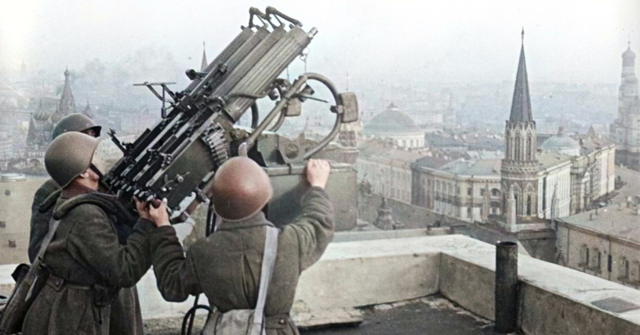
The Russians would say this nail-biting slugfest was one of the most significant in history. The German attack on Moscow failed due to terrible weather and surprisingly strong Soviet resistance. Stalin deserves some credit for the newfound, iron resolve of the Red Army. Having almost wiped out the senior ranks of the Red Army in purges during the 1930s, it was perhaps a miracle that leaders emerged to rally the Soviet Union’s beleaguered forces. But they did. A massive Soviet counteroffensive in December 1941 not only stopped Hitler’s armies but also put them on the defensive, marking the first major defeat for Hitler on the Eastern Front.
As the great Marshal Zhukov recalled, at the gates of Moscow, the Germans “found real war, but they were not ready for it. They were used to easy victories.” Hitler had been terribly wrong in predicting a walk-over in Russia: “You have only to kick in the door, and the whole rotten structure will come crashing down.” That system would eventually, three very bloody years later, be the Third Reich itself.
2] The Battle of Stalingrad (August 1942 – February 1943)

What can one say about Stalingrad that doesn't quickly become exaggerated? The numbers alone are staggering—over half a million Axis troops killed and more than a million on the Soviet side—in the largest winter battle in history. Arguably the most significant battle of WWII because it signaled Hitler's eventual defeat, the fight for Stalingrad raged through autumn and the harsh winter of 1942-43. Stalin’s forces finally managed to encircle the German 6th Army, which surrendered in February 1943, dealing a catastrophic blow to the Wehrmacht and Nazi Germany, and inspiring hope among millions suffering under oppression in Europe. General Vasily Chuikov, commander of the Soviet 62nd Army, told Red Army troops arriving at the front: “We are entering hell...No, this isn't hell, this is ten times worse than hell.”
3] The Siege of Leningrad (September 1941 – January 1944)
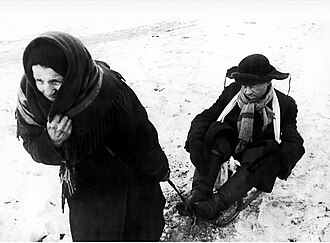
If you want to marvel at human endurance and courage, then read about the Siege of Leningrad, the longest siege of WWII. The harshest months, when most people succumbed to starvation and in many cases froze to death, came during the savage Russian winters. Hitler’s armies laid siege to Russia’s second-largest city for an incredible 872 days, leading to the loss of over a million lives—by some estimates, as much as half of the city’s pre-war population.
It was not described as an act of genocide at the time, but today some historians call it exactly that – the deliberate, merciless starvation of a civilian population. “I am becoming an animal,” remembered one Russian woman. “There is no worse feeling than when all your thoughts are on food.” Another woman wrote: “Everyone is shriveled, their breasts sunken in, their stomachs enormous, and instead of arms and legs just bones poke out through wrinkles.” As you snuggle under a duvet or add another log to a roaring fire this winter, think of the children of Leningrad under siege and count your blessings.
4] The Battle of the Bulge (December 1944 – January 1945)
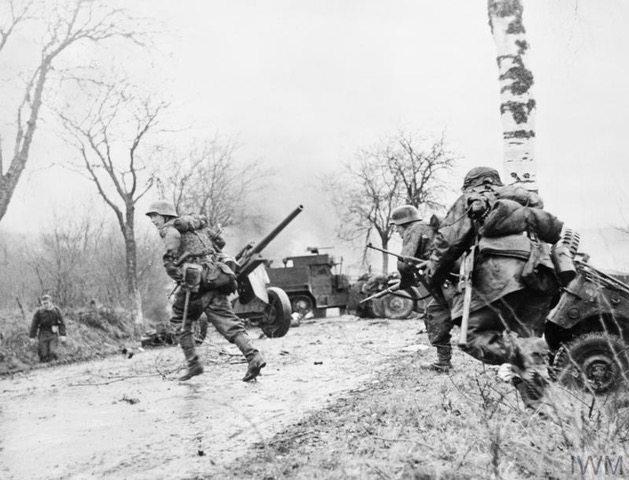
The Battle of the Bulge was not named after a Weight Watchers campaign but because of the seventy-mile bulge in Allied lines—the extent of the German penetration of a thinly manned front in the Ardennes. About 19,000 Americans lost their lives before the Germans were pushed back after six weeks. It was the deadliest battle for US of WWII and, after D-Day on June 6, 1944, the most famous campaign in Europe.
Today, among the small remaining group of WWII veterans from the US, more are survivors of this battle than any other. That’s because about 800,000 Americans took part. Every survivor I’ve spoken with mentions the terrible cold. In fact, it was an unusually harsh winter, several degrees colder than normal. You’d hug your foxhole buddy to share body warmth, or you’d never wake up, dead from frostbite. You slept under a tank to feel its engine’s warmth. “The bolt would freeze on our machine guns,” recalled one soldier. “We remedied that by urinating on them just before we fired.” Another veteran remembered: “I jerked awake so quickly I left a whole patch of my hair frozen to the wood. I was too scared to care.” You never, ever complained about having to clear snow from your driveway if you were lucky enough to survive in one piece.
5] The Battle of Attu (11–30 May 1943)
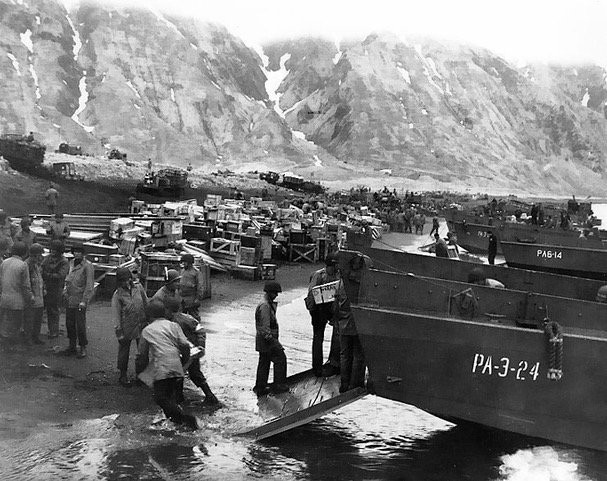
I’m always puzzled why this battle isn't more widely recognized or remembered. The Battle of Attu was the only one actually fought on North American soil and showed what might have happened if the Japanese had succeeded in invading, say, California, as many feared after Pearl Harbor. There would have been little mercy shown on either side. The US, supported by Canadian reconnaissance and fighter-bombers, fought the Japanese on the remote Attu Island in the Aleutians. It was the only land battle where the Japanese and Americans clashed in winter conditions - as far from jungle warfare as you could get. Still, it was no less deadly and horrific – fighting only ended when most Japanese defenders were killed in close combat after a final banzai charge broke American lines. Over nineteen days, more than 500 US soldiers lost their lives. The Japanese suffered over 2000 casualties, with only 28 taken prisoner. More than a thousand US troops also endured frostbite.
6] Battle of Monte Cassino (January – May 1944)
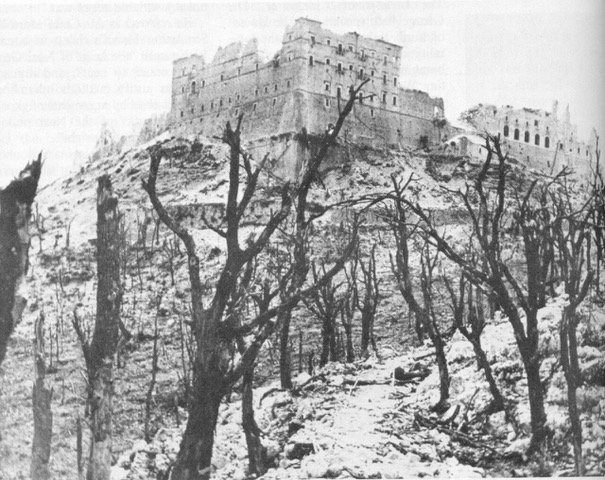
I’ve visited the incredible abbey of Monte Cassino several times and tried to imagine what it was like to fight in the mountains around this German stronghold in bitter cold. The Battle of Monte Cassino was actually four fierce campaigns during which the Allies fought to break through the Gustav Line, one of several defensive lines set up by Albert Kesselring, who had vowed that the Allies would “break their teeth” on his mountain defenses. They did indeed bleed, suffering heavy casualties before they finally captured the abbey at Monte Cassino. “The monastery,” remembered one New Zealander, “became, not a monster, but a hypnotic attraction really. It embodied everything in evil: waiting, watching, glowering down from that sheer hill.”
7] Battle of Suomussalmi and Raate Road (December 1939 – January 1940)
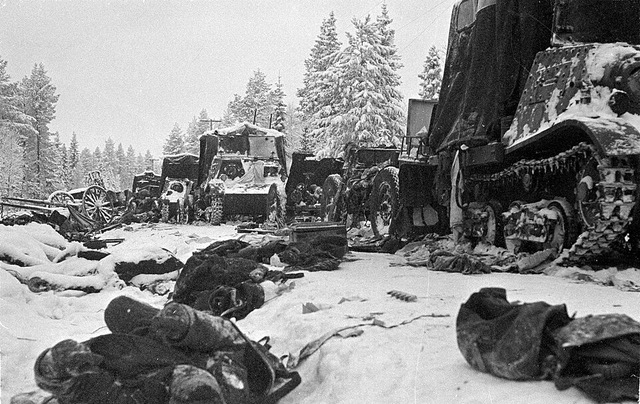
I’ve always been fascinated, as an avid cross-country skier, by the winter battles that involved men using sleds and skis. Part of the Winter War between Finland and the Soviet Union, this battle saw plucky, outmanned Finnish forces, deploying highly skilled ski troops, taking full advantage of the extremely cold conditions, and destroying two entire Soviet divisions. The Finns demonstrated how effective they were at winter warfare and humiliated Stalin. Never underestimate troops used to operating in extreme climates, or men on skis fighting for their nation’s survival.
8] Battle of the Hurtgen Forest (19 September to 16 December 1944)
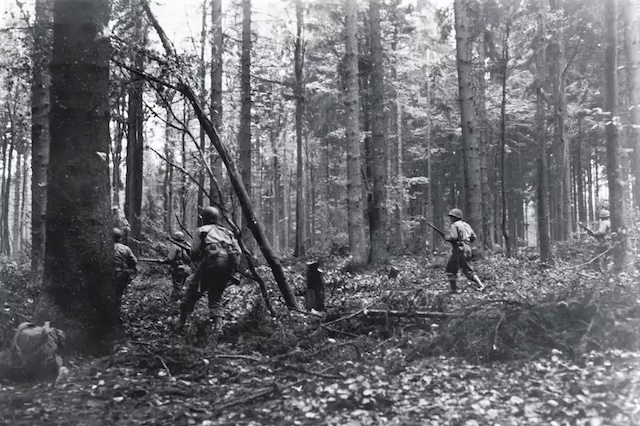
The liberation of Western Europe was not guaranteed once the Allies landed on June 6, 1944. Just look at the tragic, and many would say futile, fighting in the Hurtgen Forest. I’ve always wondered why more senior generals weren't dismissed or even disgraced because of the carnage inflicted on no fewer than nine esteemed US Divisions in what became known as the “meat-grinder”.
Fought from September 19 to December 16, 1944, in a 54-square-mile area just east of the Belgian–German border, this tragic loss of life, lasting 88 days, was the longest battle on German soil fought by the US and the second longest in US military history, surpassed only by the three-month-long Battle of Bataan, a notable defeat. I would argue that the soul-searing ordeal in the densely wooded forests of the Hurtgen was similarly disastrous, where incompetence and indifference at higher levels resulted in over 30,000 US casualties. Courtney Hodges and Omar Bradley were largely responsible, but they were too valued, prominent, and respected by Eisenhower to be publicly reprimanded or punished. The HBO film, "When Trumpets Fade," powerfully depicts the madness and horror of this shameful winter battle.
9] Operation Nordwind (December 1944 – January 1945)
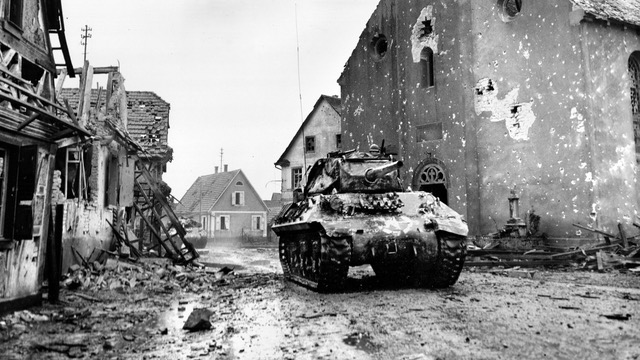
I’ve talked to several veterans who fought with the 45th Infantry Division during this battle, the last major German offensive on the Western Front. They all remembered the freezing cold and the shock of being forced into a hasty, humiliating retreat when they were told that the Allies had all but won the war. The Allies were caught off guard for the second time in two months, first in the Ardennes, then in the Alsace and Lorraine regions.
For my book, The Liberator, I was able to gather testimony from Johann Voss, an SS machine-gunner and author of “Black Edelweiss.” He agreed that Operation Nordwind ultimately failed because it was poorly planned. The operation revealed once again that the Americans were woefully lacking in intelligence gathering, overly dependent on Ultra, but also adaptable, resilient, and quick to recover—just like during the Battle of the Bulge. Voss and his fellow soldiers knew how to fight in winter conditions and were still willing to die for the Fatherland, but it was all for nothing. They lacked the artillery support and airpower to do more than shock and cause chaos for a few days.
10] The Battle of Garfagnana (December 1944)
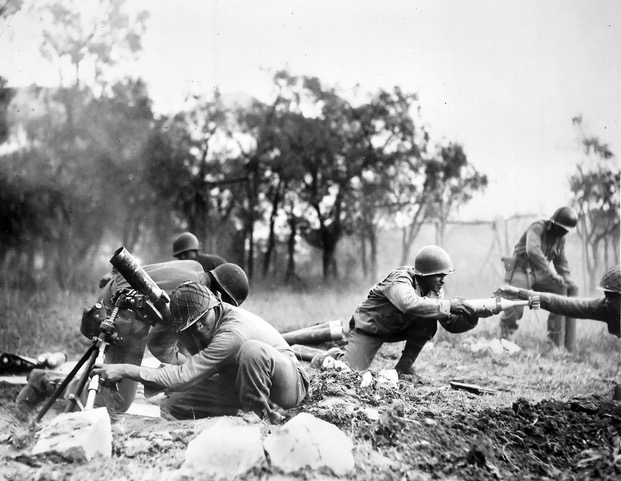
This battle, known to the Germans as Operation Winter Storm and also called the “Christmas Offensive,” has largely been forgotten but showed that the Germans could perform superbly even in the last months of the war. This surprise attack against the Americans defending the Gothic Line took place in the Apennines in northern Tuscany.
In late December 1944, the German 14th Army struck hard at the U.S. Fifth Army in the Serchio Valley, north of Lucca, forcing the mostly African-American 92nd Infantry Division to retreat. After dealing the Americans a heavy blow, the 14th Army withdrew, showing that while it couldn’t win a campaign, it could inflict significant casualties when it chose. The Italian Campaign was a long, frustrating slog of attrition, a bloody grind through Italy’s mountainous spine. Throughout the war in Italy, Allied forces faced constant frustration, failing to free the country even by the end of the European war—largely due to the brilliance of German commander Albert Kesselring, the undisputed master of defensive warfare.


