X


These ten artists made powerful art during World War II, and some even gave their lives for their work.
1] HENRY MOORE.
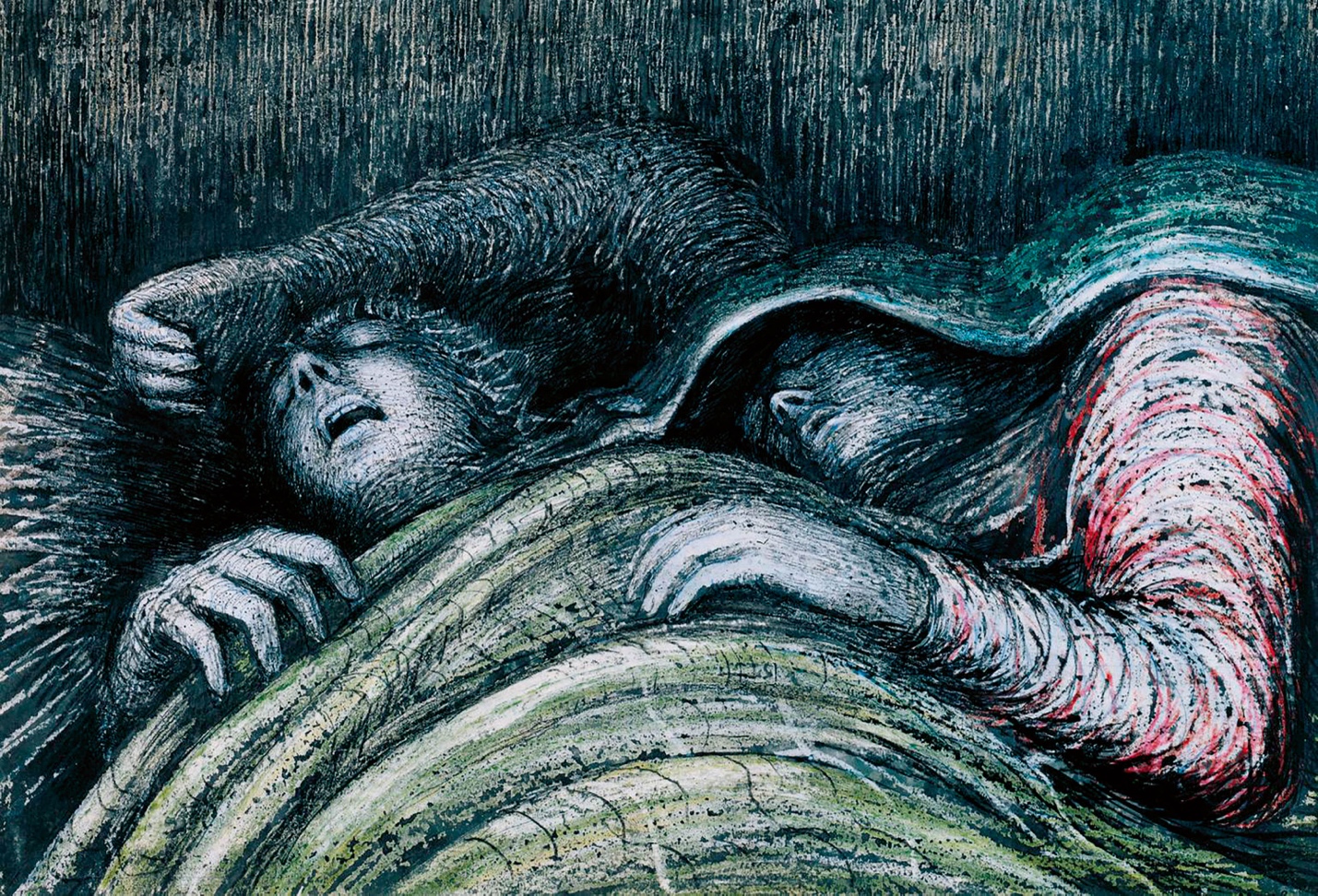
On September 11, 1940, British artist and sculptor Henry Moore was in a London Underground station during the fourth night of the Blitz. What he saw inspired his famous “Shelter” drawings. He worked on these for nearly two years, and today they are as closely linked to the Blitz as the famous photos of “bulldog-spirited” Churchill and of a still-standing St Paul’s Cathedral shrouded in smoke.
2] OLGA LEHMANN.
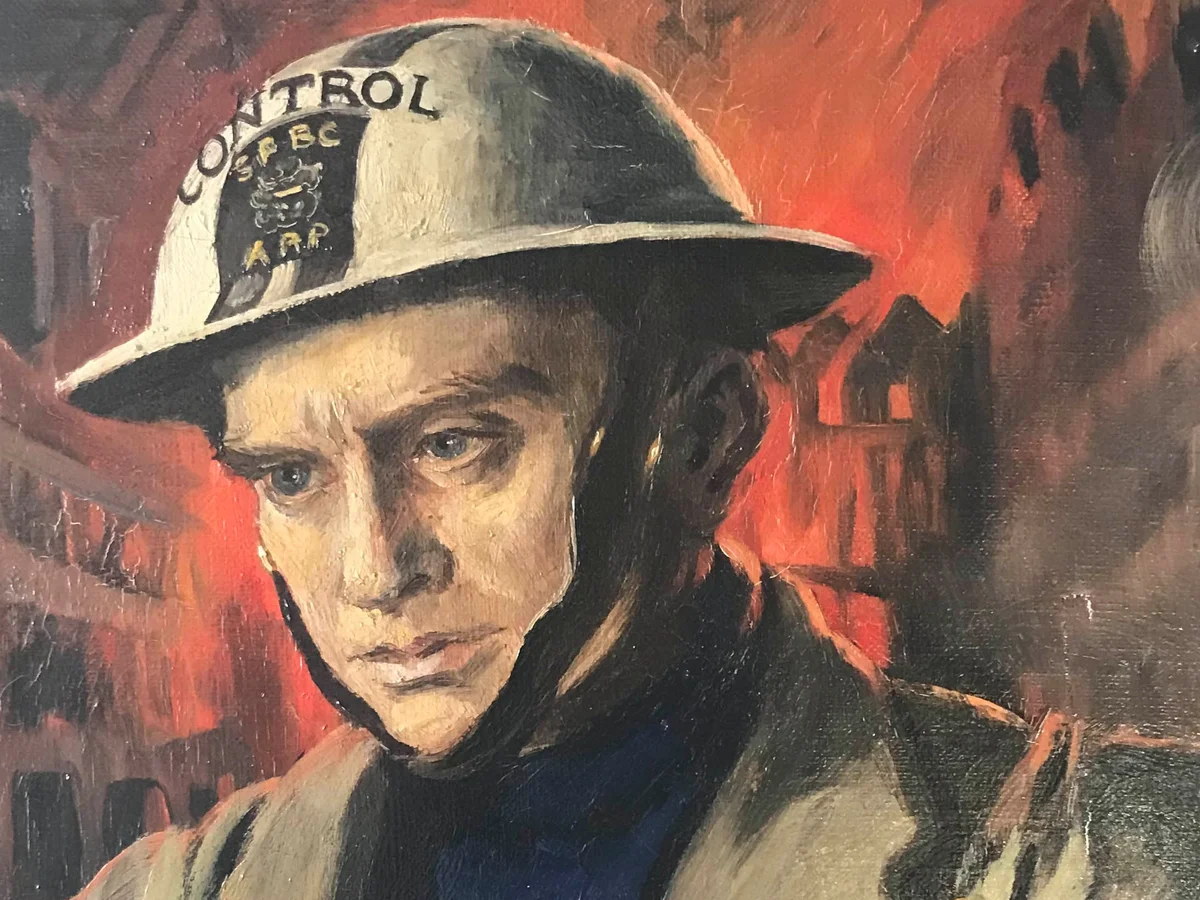
The Chilean-born artist, Olga Lehmann, moved to England in 1929 to attend art school. Over the next ten years, she became known for her murals and portraits, including one of the actor Dirk Bogarde. She painted this moving image of an air raid warden during the Blitz in 1940. Sadly, her studio in Hampstead was destroyed in the bombing, and much of her work was lost. Thankfully, this painting survived.
3] PICASSO.
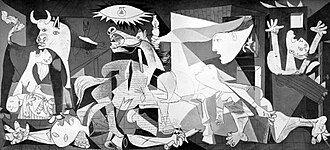
Picasso painted his masterpiece, Guernica, in 1937, and it became a powerful symbol against all war. During World War II, he stayed in occupied Paris, and some say this was, in a way, an act of resistance. This painting reminds us of what war increasingly became in the 20th century – indiscriminate killing of civilians. Picasso created the mural after the bombing of Guernica on April 26, 1937, during the Spanish Civil War, a tragic preview of WWII. The Spanish Republican government asked him to make the painting for the 1937 Paris International Exposition. Picasso wanted the painting to stay in exile until Spain became a democracy. It finally returned from New York to Madrid in 1981, six years after the death of dictator Francisco Franco.
4] DAME LAURA KNIGHT.
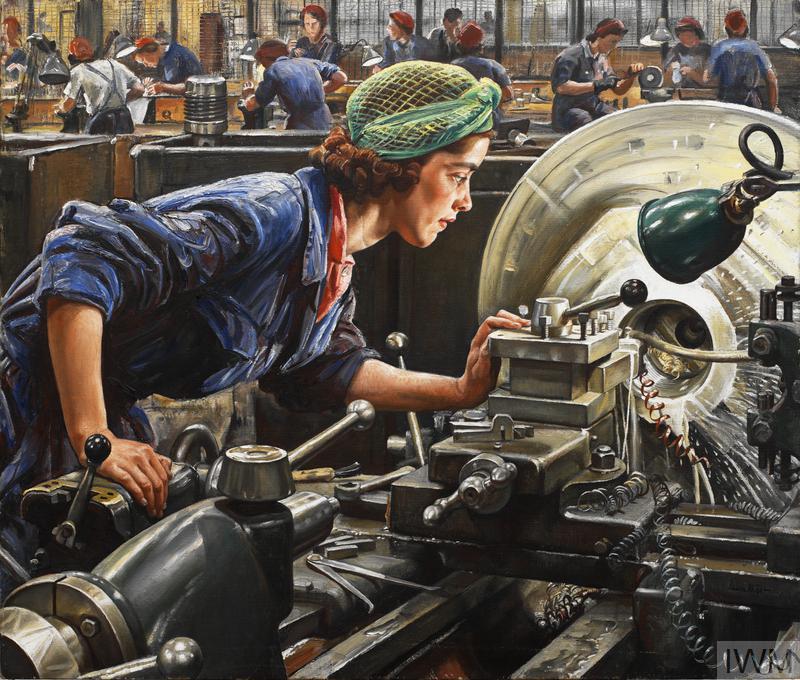
Dame Laura Knight, a British artist, was one of the few official women war artists. She is best known for showing women’s roles in the war, especially in her painting “Ruby Loftus Screwing a Breech-Ring” and her sketches of the Nuremberg Trials. The 1943 painting shown above shows Ruby Loftus, a young woman, working at a lathe. Loftus became an expert at making breech rings in just seven months, much faster than usual. Most of the people in the scene are women, with only one man in the background. When it was shown at the 1943 Royal Academy Summer Exhibition, it was a smash hit, winning the prize for the best picture.
5] THOMAS LEA.
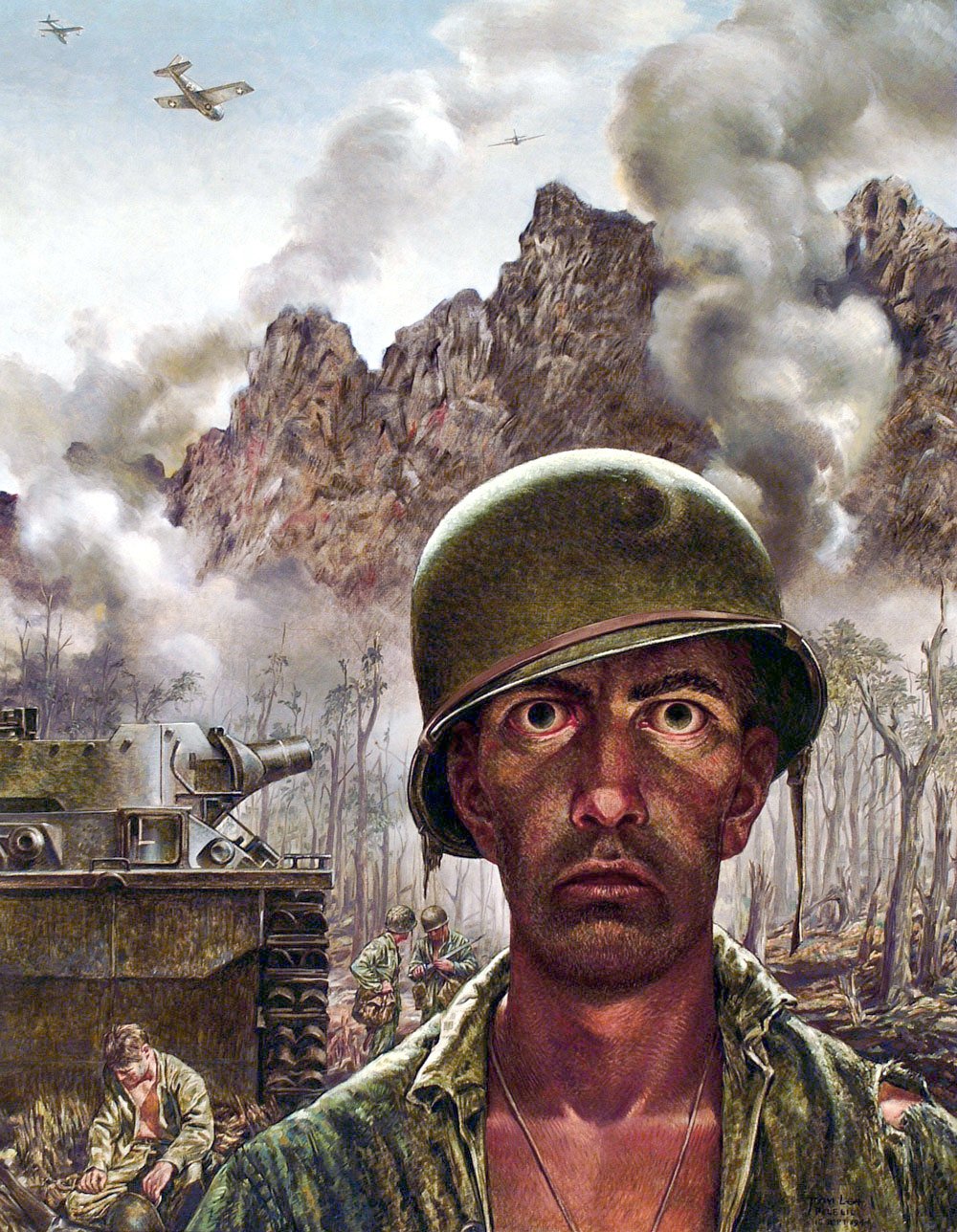
Thomas Lea was a fantastically gifted combat artist whose paintings, like “The 2,000 Yard Stare", showed just how disturbed and broken soldiers were in the hell of the Pacific War. No photograph has, to my mind, shown the psychological and physical trauma of the infamous slaughter that was the Battle of Peleliu. At a time when pro-war propaganda was the norm and the media very rarely discussed battle fatigue, Lea joined the 1st Marine Division in 1944 to show what really happened to the young men involved in the assault on Peleliu in September 1944, in which some two thousand Marines were killed.
6] PAUL NASH.
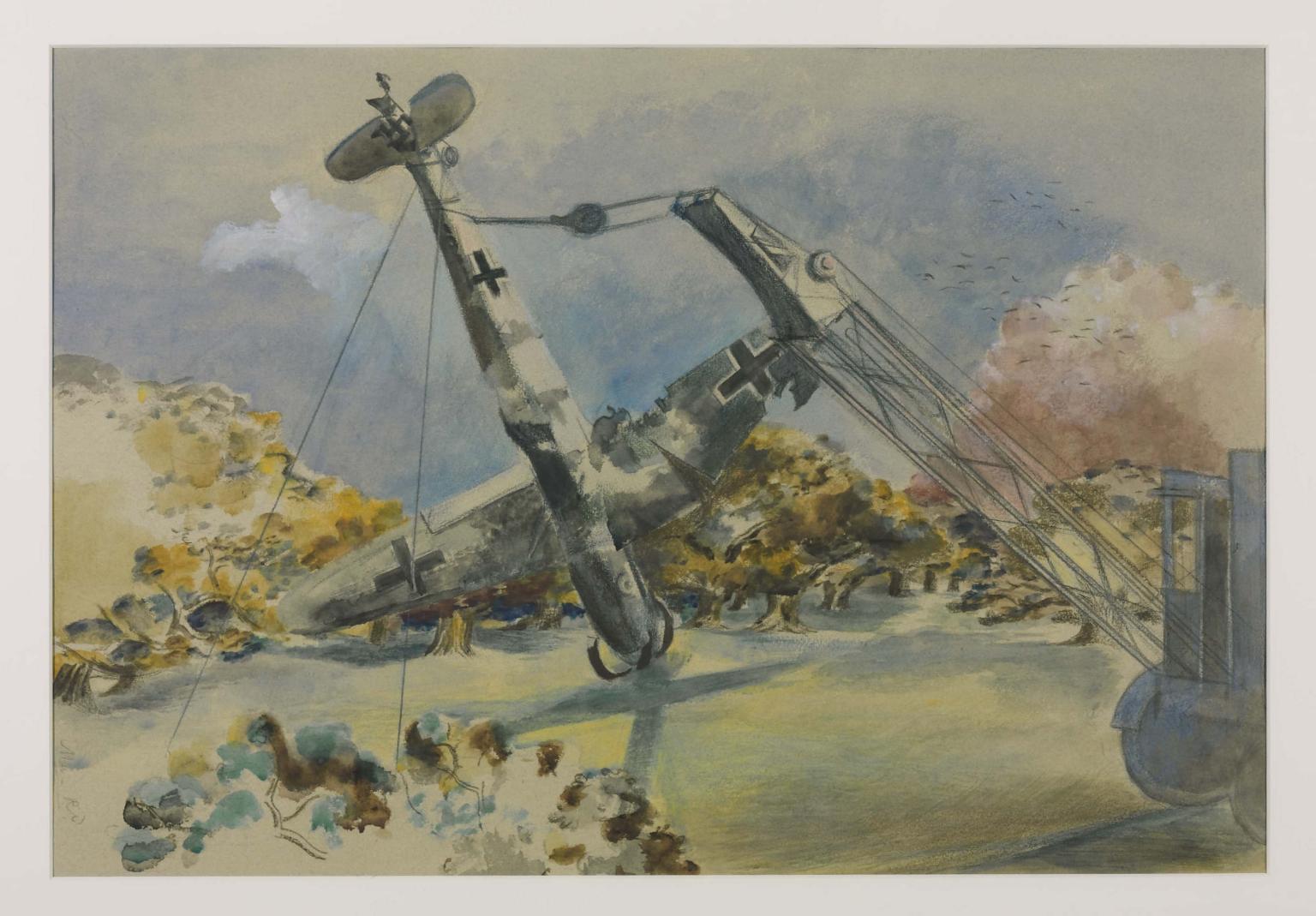
British painter Paul Nash was an official war artist in both World Wars and is now seen as one of Britain’s greatest painters of conflict. In WWII, he mainly focused on air combat, which, like tank warfare, was a much-discussed, relatively new phenomenon. His paintings showed how modern industrial warfare put people against machines, often leading to huge losses, as seen at Hiroshima and the scorched cities subjected to strategic bombing. Drone warfare has taken this depersonalization of war to an even more extreme stage. To be human on battlefields in the 21st Century is to have an even shorter life span than on the vast killing fields of WWII.
7] ERIC RAVILIOUS.
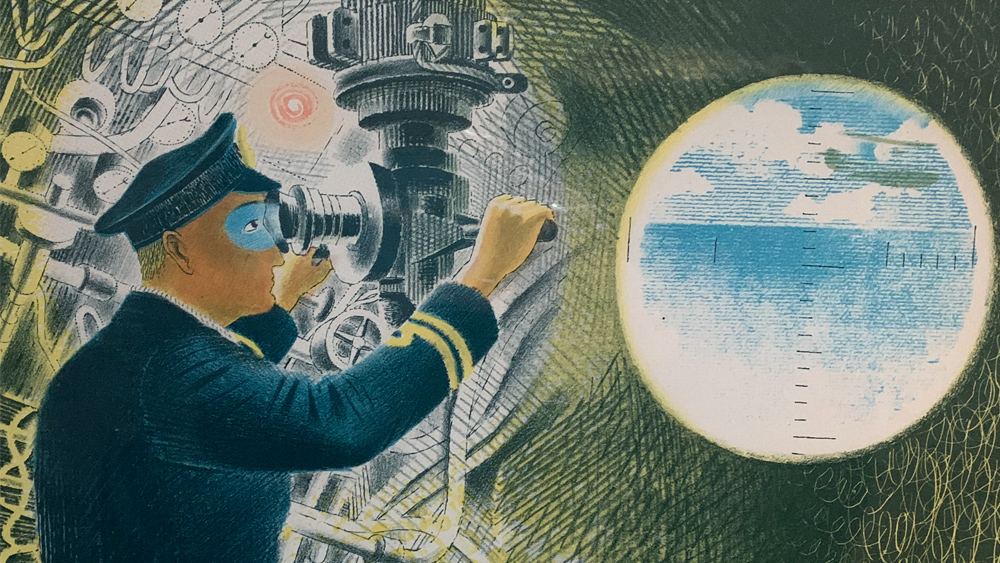
Another British artist, Eric Ravilious, was a wonderful watercolorist and engraver, celebrated today for his delicate style. I am, of course, biased, being British, and this list shows my bias, not just in selecting so many British artists, but also in not choosing Axis ones. But such is the privilege of authorship! Ravilious painted naval operations and aircraft with almost child-like whimsy. In December 1939, he was appointed by the War Artists' Advisory Committee and given the honorary rank of Captain in the Royal Marines. Unlike many other war artists, Ravilious did not show bloodshed. Instead, he focused on technology, machinery, and coastal landscapes. His wartime paintings included submarines, aircraft carriers, barrage balloons, and bomb defusing equipment – hardware, not flesh and blood. He was the first British war artist to die on active service when his plane disappeared near Iceland in 1942.
8] NORMAN ROCKWELL.
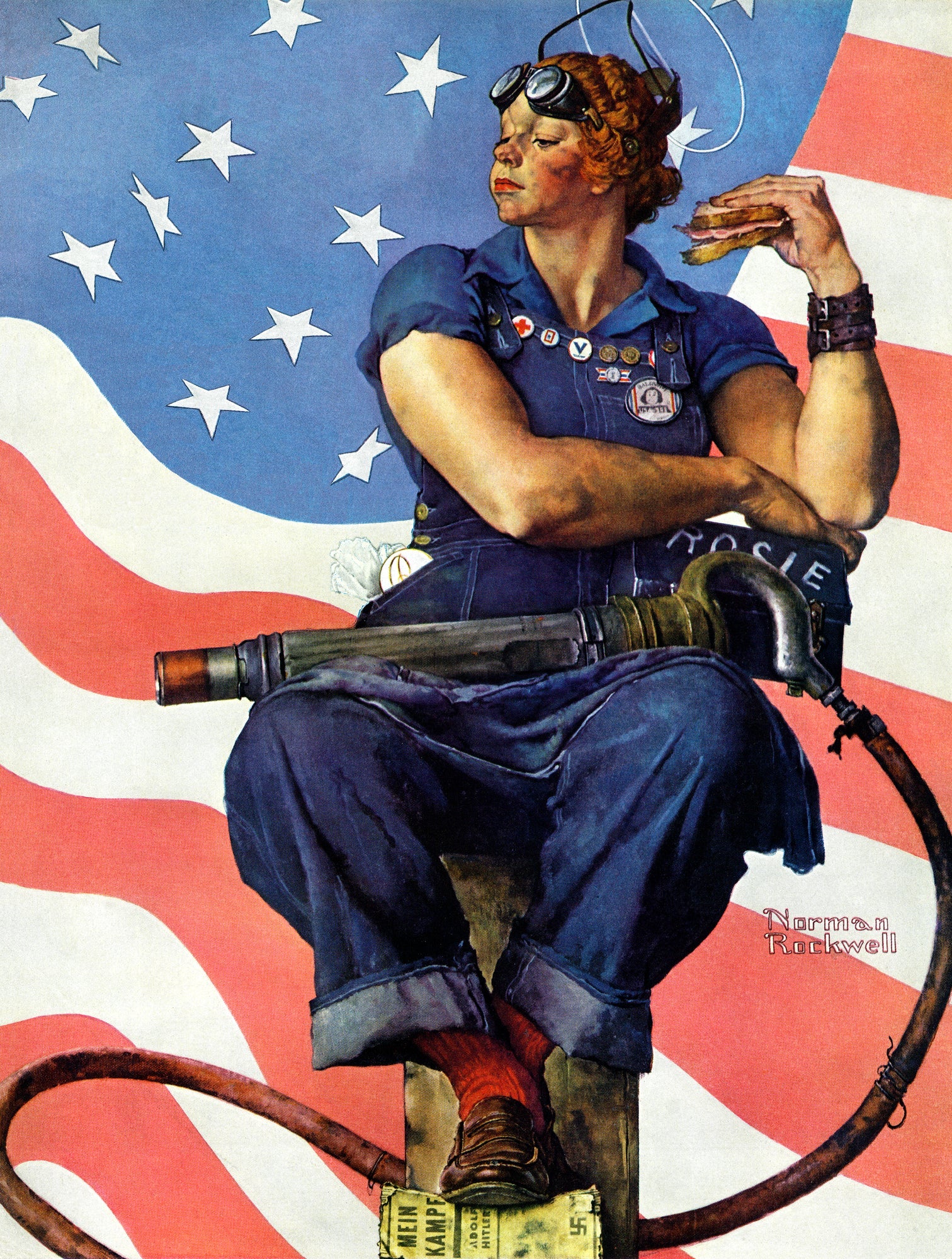
Famous for his “Four Freedoms” series (1943) and many other covers for the Saturday Evening Post, Rockwell played an important role in boosting American morale on the home front. I don’t want to get bogged down in this list on the distinction between illustrator and artist - Rockwell was both. And as far as I am concerned, and most others, he was indisputably a fine 20th-century artist whose work had a real impact on the average American, tens of millions of them. I’m a huge fan, as loyal readers of this series already know!
9] STANLEY SPENCER.
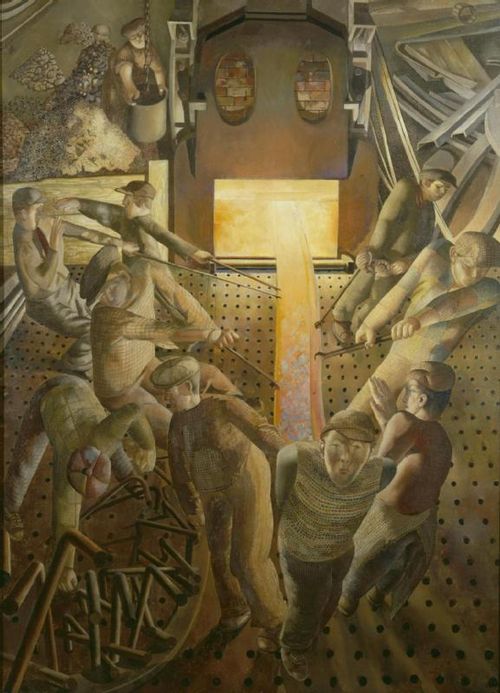
Stanley Spencer, yet another British artist, was at the height of his career when he was asked to document the industrial work in wartime Scotland. His “Shipbuilding on the Clyde” series turned the hard graft of shipbuilders into grand scenes that looked like religious frescoes. Spencer knew war personally. In World War I, he spent two and a half years on the front lines in Macedonia, fighting German and Bulgarian troops, before leaving the Army because of malaria. His older brother was killed, as were many of his friends. Surviving that war affected the rest of his life and his art, often somber yet gentle.
10.] MCLELLAND BARCLAY.
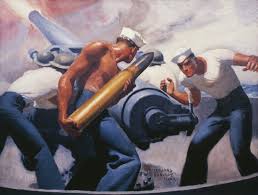
Barclay was the real deal—a true artist and hero. He reported for active duty in 1940, well before Pearl Harbor, and during WWII he painted some of the most moving images of the US Navy. In fact, he’s my favorite artist on that subject. Barclay worked at the US Navy’s New York Recruiting office for two and a half years, creating posters. But he wanted to see action, and he did. In March 1943, he told the San Francisco Examiner: “A camera cannot catch the human element of a fight, the sweat and blood and courage our boys expend every time they face the enemy.” He served in both the Atlantic and Pacific, on the USS Arkansas (BB-33), USS Pennsylvania (BB-38), USS Honolulu (CL-48), and USS Maryland (BB-46). Promoted to Lt. Commander, Barclay painted and sketched at sea until July 18, 1943, when he was reported missing in action. The USS LST-342, the last ship he was on, was torpedoed in the Solomon Islands. Barclay's body was never found.


